
Emerging Trends and Technologies Shaping Automotive Sales
The tools and expectations driving automotive sales are changing fast. For dealership leadership, staying ahead means understanding which trends are worth investing in and how they affect the way your team operates.
The Sales Process Is Already Different
The shift in how vehicles are sold is not a future event. It is already well underway. Customers research online before making contact, expect faster and more transparent communication, and increasingly compare the dealership experience against the frictionless buying processes they encounter in other industries.
For Dealer Principals, General Managers, and Sales Managers, this means the sales process that worked five years ago is no longer enough. The dealerships adapting their operations to meet these evolving expectations are gaining ground. The ones waiting for things to settle back to normal are falling behind.
The trends reshaping automotive sales are not theoretical. They are practical, operational changes that affect how teams are structured, how customers are engaged, and how leadership manages performance.
Artificial Intelligence in the Dealership
AI is already present in many dealership operations, even where leadership may not recognise it by name. Chatbots handling after-hours website enquiries, automated lead scoring that prioritises follow-up, and predictive tools that flag at-risk deals are all AI applications that are in production across the industry.
The most practical near-term application for dealership leadership is predictive analytics. By analysing historical sales data, customer behaviour patterns, and lead source performance, AI tools can surface insights that would take a human analyst hours to compile. Which leads are most likely to convert? Which customers in the database are approaching a typical replacement cycle? Which pipeline deals are showing signs of stalling?
These insights do not replace the sales team. They make the sales team more effective by directing their time and effort toward the highest-value activities. For leadership, the benefit is visibility into patterns and trends that would otherwise go unnoticed until they showed up in the monthly numbers.
The key for dealership leadership is to approach AI practically. Start with the tools that solve a specific, measurable problem in your operation. Lead response automation, follow-up sequencing, and pipeline health scoring are all high-impact, low-complexity starting points. The dealerships that try to implement everything at once typically adopt nothing effectively.
The Digital Buying Journey
The proportion of the vehicle buying journey that happens online continues to grow. Customers research models, compare specifications, check pricing, read reviews, and watch video content before ever contacting a dealership. By the time they submit an enquiry or walk through the door, most have already made significant decisions about what they want and what they expect to pay.
This shift has direct implications for how dealerships present themselves online. The website is no longer a brochure. It is the first point of engagement for the majority of customers. Inventory must be current and accurately priced. Vehicle images need to be high quality. The path from browsing to enquiry needs to be simple and available on every device.
Virtual vehicle presentations are becoming more common. Video walkarounds, live video calls with sales consultants, and detailed online vehicle configurators all allow customers to engage with the product without visiting the showroom. For regional and rural dealerships in particular, these tools expand the addressable market beyond the local area.
For leadership, the operational question is whether the dealership's digital presence matches the standard customers now expect. If a competitor's website offers better imagery, clearer pricing, and easier enquiry options, the customer will engage with them first. The showroom experience still matters, but it is no longer where the relationship starts.
Personalised Customer Engagement
Mass marketing and generic follow-up are becoming less effective as customers expect communication that is relevant to their specific situation. The dealerships that are investing in personalised engagement, where the message, timing, and channel are tailored to the individual customer, are seeing stronger conversion and retention rates.
This does not require complex technology. It starts with using the data you already have. A customer who enquired about a specific model should receive follow-up about that model, not a generic newsletter. A service customer approaching the end of their warranty period should receive a targeted communication about extended coverage options. A previous buyer who typically trades every three years should be contacted proactively as that window approaches.
Loyalty programs and structured post-sale communication are also gaining traction. Dealerships that maintain an active relationship with customers after delivery, through service reminders, new model alerts, and exclusive offers, build a retention pipeline that reduces dependence on new customer acquisition.
For leadership, the investment is in the process and the data, not necessarily in expensive platforms. Clear segmentation of the customer database, defined communication triggers for each stage of the ownership lifecycle, and accountability for follow-up execution are the foundations that make personalised engagement work.
Data-Driven Performance Management
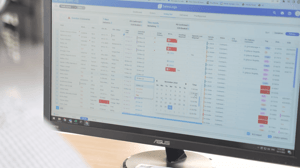
Access to real-time data is changing how dealership leadership manages performance. The traditional cycle of monthly reporting, where numbers are compiled after the fact and reviewed retrospectively, is being replaced by live dashboards and daily reporting that allow managers to act during the month rather than react after it.
This shift affects every level of the dealership. Sales managers can see pipeline health and individual rep performance in real time. Finance managers can track penetration rates as deals progress rather than after they settle. General Managers and Dealer Principals can monitor cross-department performance without waiting for individual reports to be compiled and sent.
The dealerships that have made this transition describe it as a fundamental change in how they manage. Decisions that used to wait for the weekly meeting are now made in real time. Problems that used to surface at month-end are now identified and addressed within days. The monthly review becomes a strategic conversation rather than a data reconciliation exercise.
For leadership considering this shift, the starting point is identifying which metrics matter most and ensuring they are visible, current, and accessible to the people who need them. Pipeline value, conversion rates, finance penetration, days in stock, and deal velocity are strong candidates for any dealership's core dashboard.
Adapting Without Overcommitting
One of the risks with emerging technology is the temptation to chase every new tool and trend. Dealerships that try to implement AI, digital retailing, personalised marketing, and new reporting platforms simultaneously often end up with a collection of half-adopted tools that no one uses consistently.
The more effective approach is to prioritise based on impact and readiness. Identify the one or two areas where a change would have the most immediate effect on your operation, implement them properly, embed them into the team's daily workflow, and then move to the next priority.
For dealership leadership, the question is not whether to adopt new technology. It is which technology solves a real problem in your business today, and whether your team is ready to use it effectively. The dealerships that approach innovation with that discipline are the ones that extract genuine value from it.